

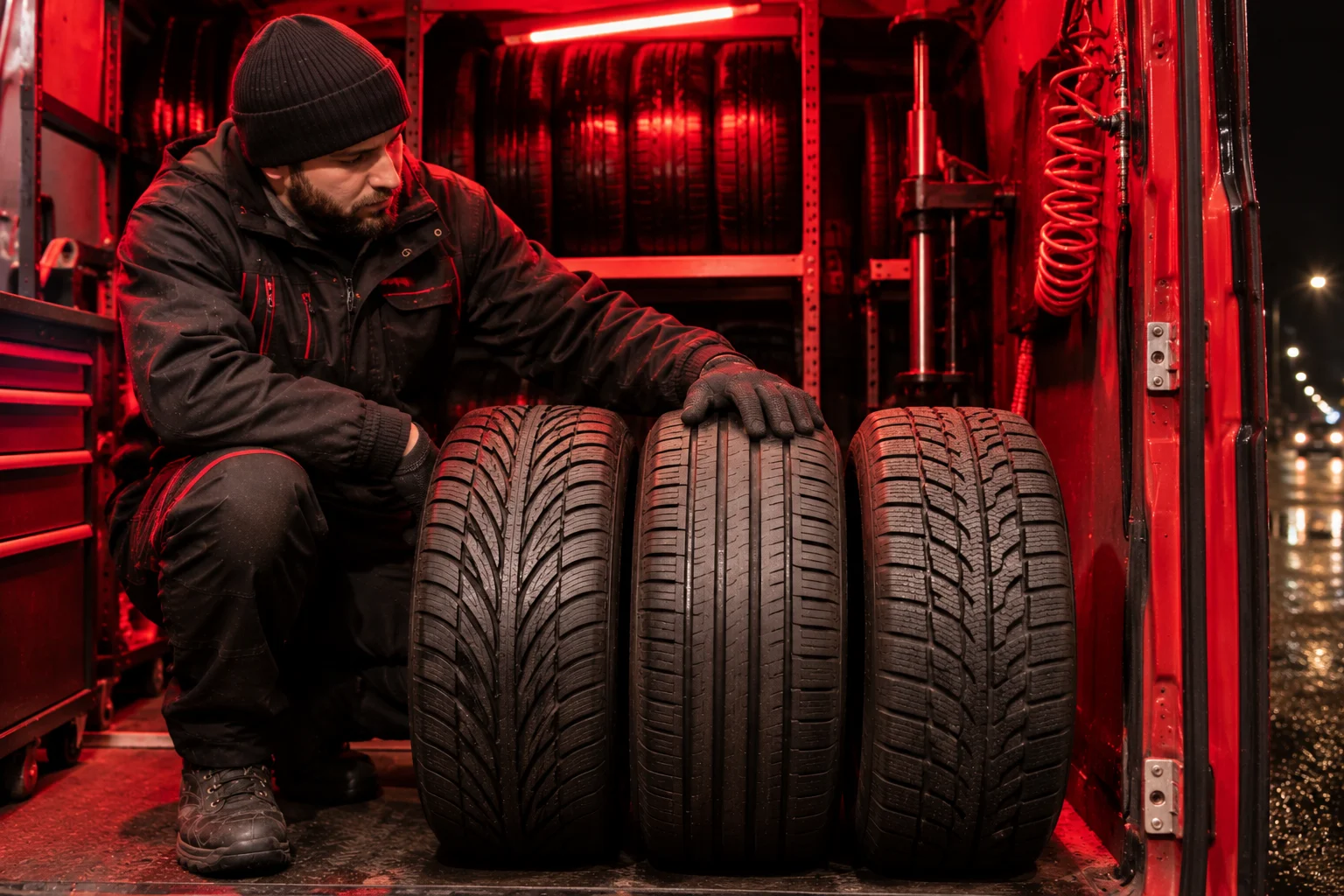
When we quote for new tyres, the first question is nearly always: “Do I really need the expensive ones?” The honest answer to budget vs premium tyres is: it depends on how and where you drive. A premium tyre on a car that does 3,000 miles a year around town is money you will never get back. A cheap tyre on a heavy car doing 25,000 motorway miles a year can cost you more in the long run – and give away grip in the wet. This guide explains what you actually get at each level so you can choose with confidence.
The three tiers in plain terms
Budget tyres
Budget tyres are the cheapest new tyres you can buy. They are legal, safe when correctly fitted and inflated, and fine for many drivers. Where they usually give ground is wet braking, wear rate, road noise and fuel economy. They suit low-mileage cars, town driving and second cars.
Mid-range tyres
Mid-range tyres are often made by the big manufacturers under their second brands, using technology from their premium ranges a few years earlier. For most family cars and daily commuters in Yorkshire, mid-range is the sweet spot between price and performance.
Premium tyres
Premium tyres come from the leading makers’ flagship ranges. You pay for the latest rubber compounds and years of testing. They usually lead on wet grip, braking distances, longevity and low rolling resistance. They make most sense for high-mileage drivers, heavy cars, performance cars and EVs.
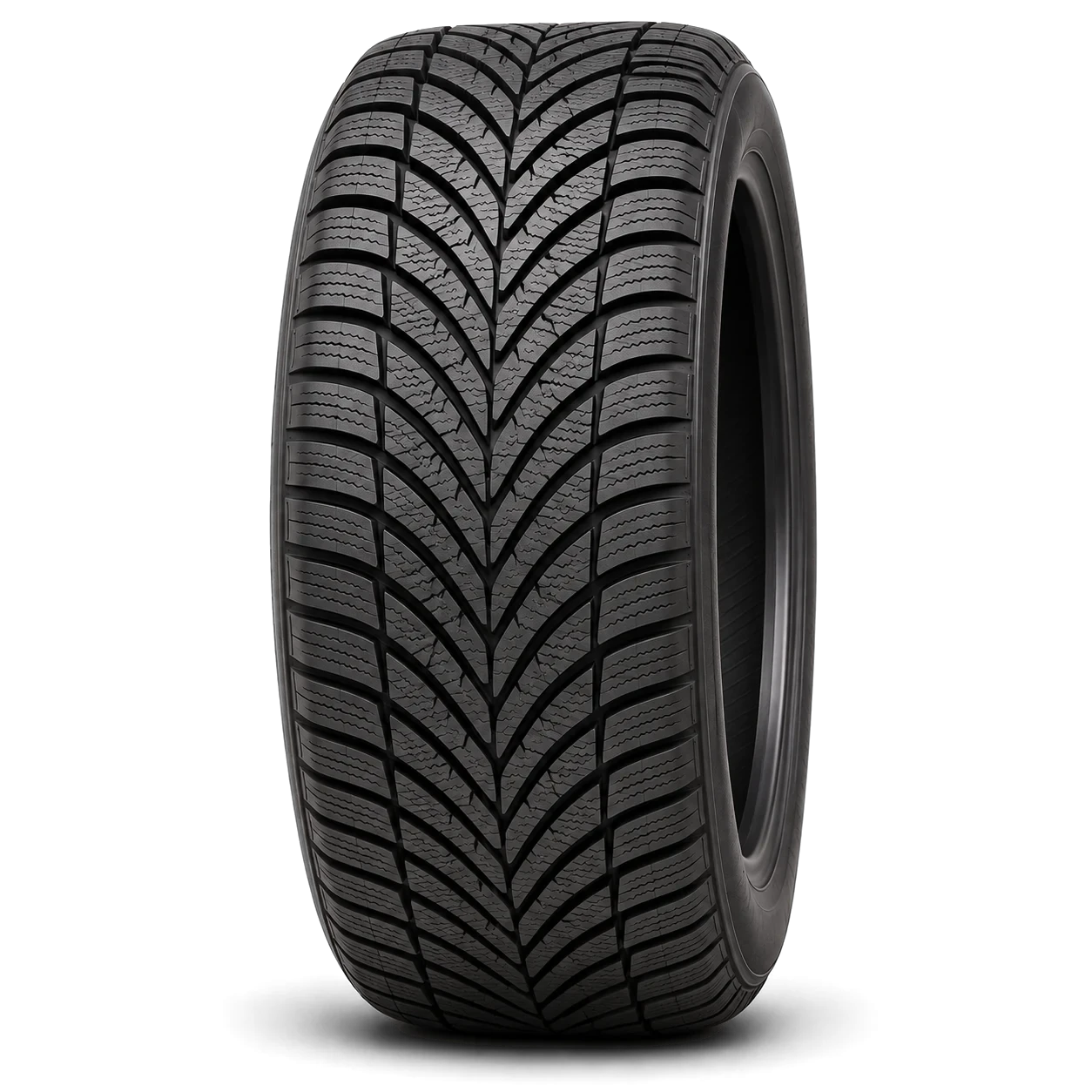
Budget vs premium tyres: what changes
| What matters | Budget | Mid-range | Premium |
|---|---|---|---|
| Price per tyre | Lowest | Middle | Highest |
| Wet braking | Acceptable | Good | Best |
| Tread life | Shorter | Good | Usually longest |
| Road noise | Often louder | Moderate | Usually quietest |
| Fuel / EV range | Higher rolling resistance | Moderate | Lowest rolling resistance |
| Best for | Low mileage, town | Most daily drivers | High mileage, heavy or fast cars |
Cost per mile, not cost per tyre
A cheaper tyre that wears out much sooner can end up more expensive per mile than a premium tyre that lasts longer. If you do big motorway miles on the M1, M62 or A1(M), work it out over the life of the tyre, not just the price on the day. Add in the fuel saving from lower rolling resistance and the gap often narrows further.
Read the tyre label
Every new car tyre sold in the UK comes with a label. It is the quickest way to compare tyres fairly:
- Fuel efficiency (A–E) – rolling resistance. A is best and helps fuel economy and EV range.
- Wet grip (A–E) – braking on wet roads. For Yorkshire weather, this is the one we would look at first.
- External noise – shown in decibels and a class from A to C.
- Snow and ice symbols – shown on tyres approved for severe winter conditions.
Two tyres at a similar price can have very different wet grip ratings, so it pays to check.
Which tier should you choose?
- Under 5,000 miles a year, mostly town: a good budget or mid-range tyre is sensible.
- Daily commuting, family car: mid-range for most; premium if you do lots of wet motorway driving.
- High mileage or company car: premium usually wins on cost per mile and safety.
- Electric car or large SUV: choose tyres with the correct load rating (often XL or HL). See EV tyres explained.
- Performance car: match the speed rating and stay with premium or the tyre approved by the car maker.
- Vans: commercial (C-rated) tyres built for the load you carry.
Rules that apply whatever you buy
- Match the size, load index and speed rating shown in your handbook or on the door sticker.
- Keep the same tyre on each axle – ideally the same brand and pattern left and right.
- Replace in pairs where you can, and put the newer pair on the rear for stability in the wet.
- Run-flats should be replaced with run-flats unless you carry a spare – see run-flat tyres explained.
What about part-worn tyres?
Part-worn tyres are second-hand tyres sold with some tread left. By law they must have at least 2mm of tread and be marked as part-worn, but you rarely know their history – kerb strikes, repairs or how long they sat in a yard. We only fit brand-new tyres. For more on tread and the law, read legal tyre tread depth in the UK.
Our honest advice
Buy the best tyre your budget allows for the driving you actually do – and never compromise on wet grip if you drive on fast, wet roads. If you are unsure, send us your tyre size, car and roughly how many miles you do a year. We will suggest a budget, a mid-range and a premium option with fixed, fitted prices, so you can compare side by side.
Message us on WhatsApp or call 07000 000 000. We fit at your home or workplace across Yorkshire – see the tyres we fit and our mobile tyre fitting price guide.