

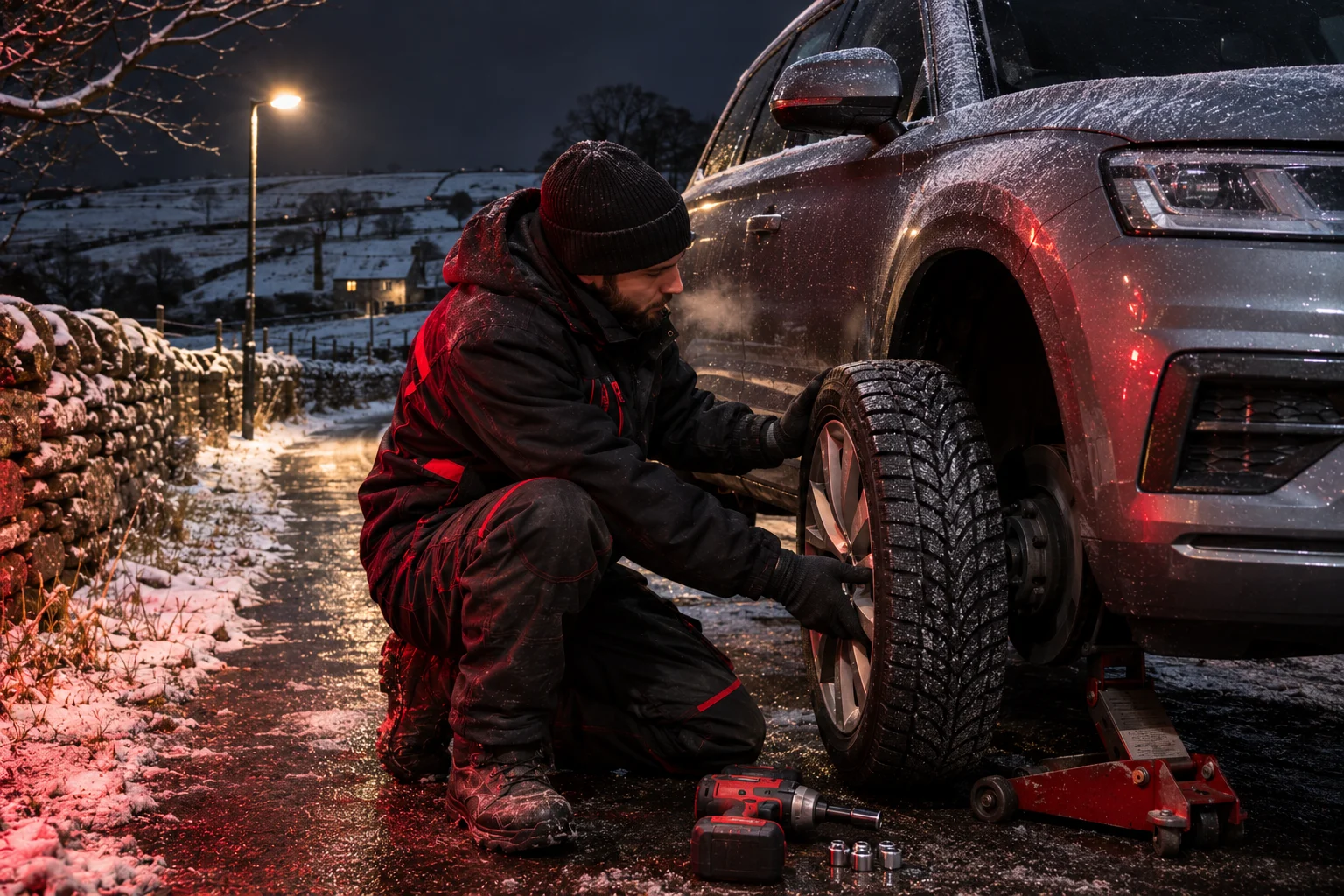
Yorkshire winters are not Alpine, but they are not gentle either. Frosty mornings in Harrogate, snow on the A66 and the Woodhead Pass, black ice in the Dales and months of cold rain on the M62 over the Pennines – the conditions change fast. That is why winter vs all-season tyres is a question more Yorkshire drivers are asking. This guide explains how each type works, what the markings mean and which makes sense for where you live and drive.
Why temperature matters more than snow
Most UK cars are sold on summer tyres. Their rubber is designed for warmer roads, and below about 7°C it starts to harden and lose grip – even on a dry road, and long before there is any snow. Across much of Yorkshire, average temperatures sit below 7°C for a big part of the year from November to March, and on high ground for longer.
Winter and all-season tyres use softer compounds that stay flexible in the cold, plus tread patterns with more sipes (tiny slits) that bite into slush and wet ice.
Winter tyres
Dedicated winter tyres give the best grip in cold, wet, icy and snowy conditions. They have deep, open tread blocks and a very soft compound.
- Best for: rural and hilly areas, high roads such as the A59 over Blubberhouses or the Snake and Woodhead passes, and drivers who must travel whatever the weather – carers, nurses, farm and estate workers.
- Downside: they wear faster and grip less sharply on warm summer roads, so you need to swap back to summer tyres in spring – two sets of tyres and two changeovers a year.
All-season tyres
All-season (or all-weather) tyres are a compromise designed to work all year round. They are better than summer tyres in the cold and better than winter tyres in summer, without being the absolute best at either extreme.
- Best for: most drivers in Leeds, Bradford, Wakefield, Sheffield, Hull and York who mainly use main roads and want one set of tyres all year.
- Downside: in deep snow or on sheet ice, a dedicated winter tyre will still stop and steer better.
Winter vs all-season tyres at a glance
| Summer | All-season | Winter | |
|---|---|---|---|
| Best temperature | Above 7°C | All year | Below 7°C |
| Cold, wet roads | Weakest | Good | Best |
| Snow and slush | Poor | Fair to good (with 3PMSF) | Best |
| Warm, dry roads | Best | Good | Weakest |
| Seasonal swaps | No (if used all year) | No | Yes, twice a year |
The markings: M+S and the snowflake
- M+S (mud and snow) – a manufacturer’s own marking. It does not prove the tyre passed any standard winter test.
- 3PMSF (three-peak mountain snowflake) – a mountain symbol with a snowflake. It shows the tyre passed an official snow performance test. Look for this on winter tyres and on the best all-season tyres.
If you drive in France, Germany or the Alps in winter, check the local rules – several countries require winter-rated tyres (usually 3PMSF) in winter conditions.
Which should you choose in Yorkshire?
- Mostly city and motorway driving (Leeds, Sheffield, Bradford, Hull): a good all-season tyre with the 3PMSF symbol is the practical choice.
- Rural or high ground (the Dales, the North York Moors, Pennine villages around Holmfirth, Hebden Bridge or Haworth): winter tyres from November to March give the most safety.
- Low mileage, flexible schedule: summer tyres can be fine if you can stay at home on the worst days – but keep a close eye on tread depth.
- Electric cars and heavy SUVs: weight does not help on ice. Choose winter or all-season tyres with the right load rating – see EV tyres explained.
Fit four, not two
Always fit winter or all-season tyres as a set of four. Fitting them only on the driven wheels makes the car unbalanced: a front-wheel-drive car with winter tyres only at the front can spin its rear end on an icy bend.
Tread depth matters more in winter
A worn tyre struggles to clear slush and standing water. The legal minimum is 1.6mm, but for winter performance many makers suggest replacing winter tyres at around 4mm. Read legal tyre tread depth in the UK for the full rules.
Winter checklist for Yorkshire drivers
- Check tyre pressures when it turns cold – pressure drops as temperatures fall.
- Look for cuts and bulges from potholes, which multiply after a freeze-thaw.
- Keep a torch, warm coat, blanket, water and a charged phone in the car.
- Know where your locking wheel nut key is – see lost locking wheel nut key.
- Save our number for a flat on a cold night: 07000 000 000.
Seasonal tyres fitted at your door
We fit winter and all-season tyres at your home or workplace across Yorkshire – no queuing at a tyre centre on the first frosty Saturday of the year. Send your tyre size on WhatsApp for fixed, fitted prices on all-season and winter options. You can also compare tiers in our budget vs premium tyres guide.