

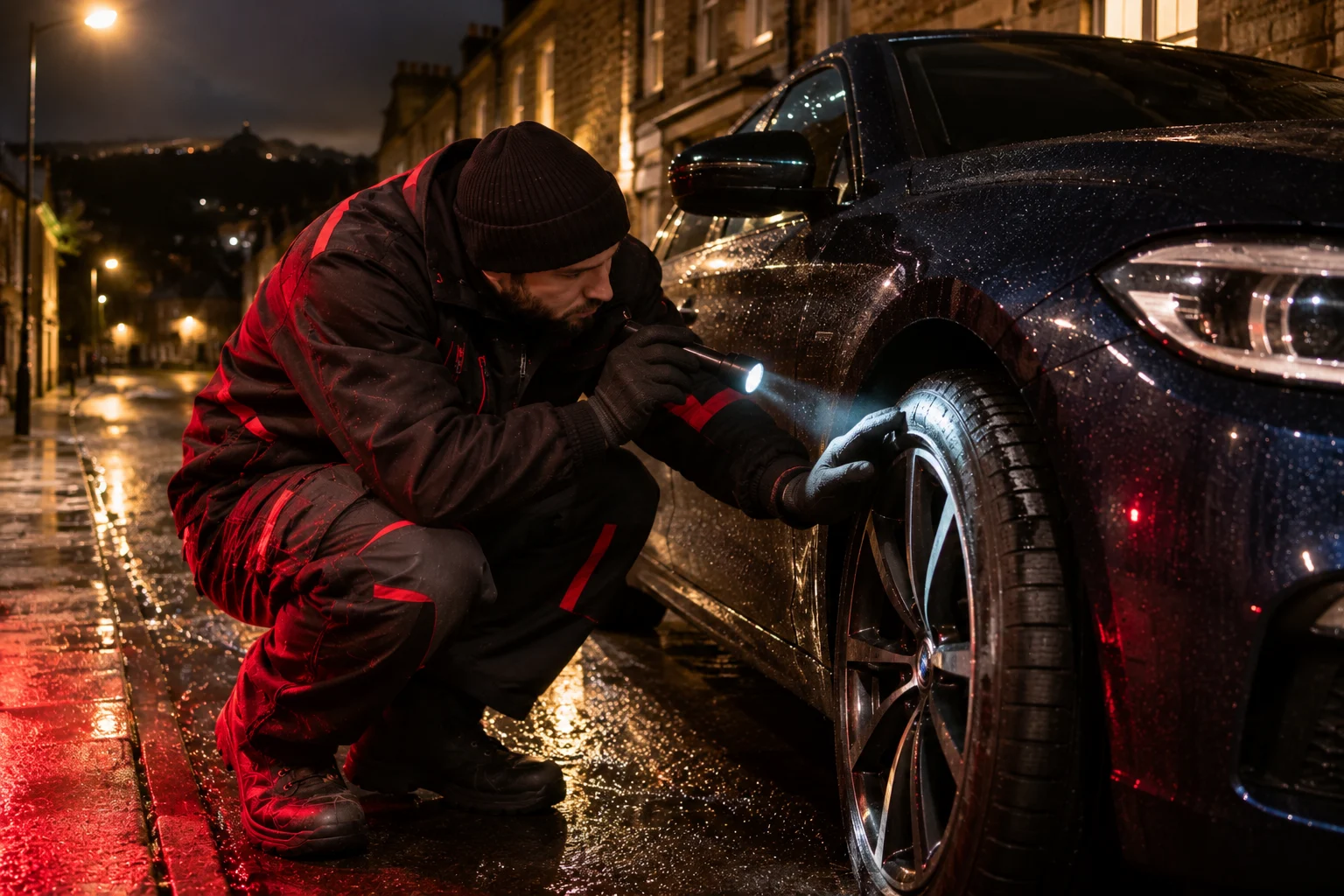
Many BMWs, Minis, Mercedes and other premium cars leave the factory on run flat tyres and no spare wheel. They are brilliant when you get a puncture on a dark road – you can keep driving to somewhere safe. But they also raise questions: how far can you really go, can they be repaired, and do you have to stick with them? This guide answers all of it, based on what we see every week fitting run-flats across Yorkshire.
What are run flat tyres?
A run-flat tyre is built to carry the weight of the car for a limited distance after it has lost all its air. On a normal tyre, the sidewall collapses as soon as the pressure goes. On a run-flat, the sidewall is heavily reinforced – or there is a support ring inside – so the tyre keeps its shape and you keep control.
How far and how fast can you drive on a punctured run-flat?
As a rule of thumb, most makers allow around 50 miles at up to 50mph after a puncture, as the RAC explains. Some premium run-flats allow more, but your handbook is the final word. The real distance also depends on how heavily the car is loaded and how hot the day is.
Treat that 50 miles as a way to get off the road safely – to your home, a service area or a car park – not as permission to finish your journey. The further you drive on a deflated run-flat, the less chance there is of saving it.
How to tell if your car has run-flats
Look on the tyre sidewall. Each manufacturer uses its own marking, but common ones include RFT, RSC, ROF, SSR, ZP, EMT, DSST and HRS. Other clues:
- There is no spare wheel and no sealant kit in the boot.
- Your car has a tyre pressure monitoring system (TPMS) – run-flats need one, because you may not feel the puncture.
- Your handbook or the original order lists run-flat tyres as standard.
Can run flat tyres be repaired?
Sometimes – but often not. The problem is that once the tyre has been driven while deflated, damage inside the reinforced sidewall may be invisible from outside. Tyre makers have different rules: some allow a repair under strict conditions, some do not allow repairs at all. Several large UK tyre chains will not repair run-flats as a policy.
When we assess a punctured run-flat, we look at how long and how far it was driven deflated, where the damage is (it must still be in the central tread area, as explained in can my puncture be repaired?) and what the maker allows. If there is any doubt, we recommend replacement – a failed repair at motorway speed is not worth the risk.
Pros and cons
| Pros | Cons |
|---|---|
| You can keep driving safely after a puncture | Firmer, sometimes noisier ride |
| No need to change a wheel at the roadside | More expensive to buy |
| More stable if a tyre loses pressure suddenly | Often cannot be repaired |
| No spare means more boot space | Need a fitter with the right equipment |
Can you swap run-flats for normal tyres?
You can, but think it through. Cars designed for run-flats usually have no spare wheel and no space for one, and their suspension is set up for the stiffer sidewall. If you switch to standard tyres, you will need a sealant kit or a space-saver, and you should tell your insurer. Our general advice is to replace run-flats with run-flats and keep the same type on every corner. Never mix run-flats and standard tyres on the same axle.
Fitting run-flat tyres
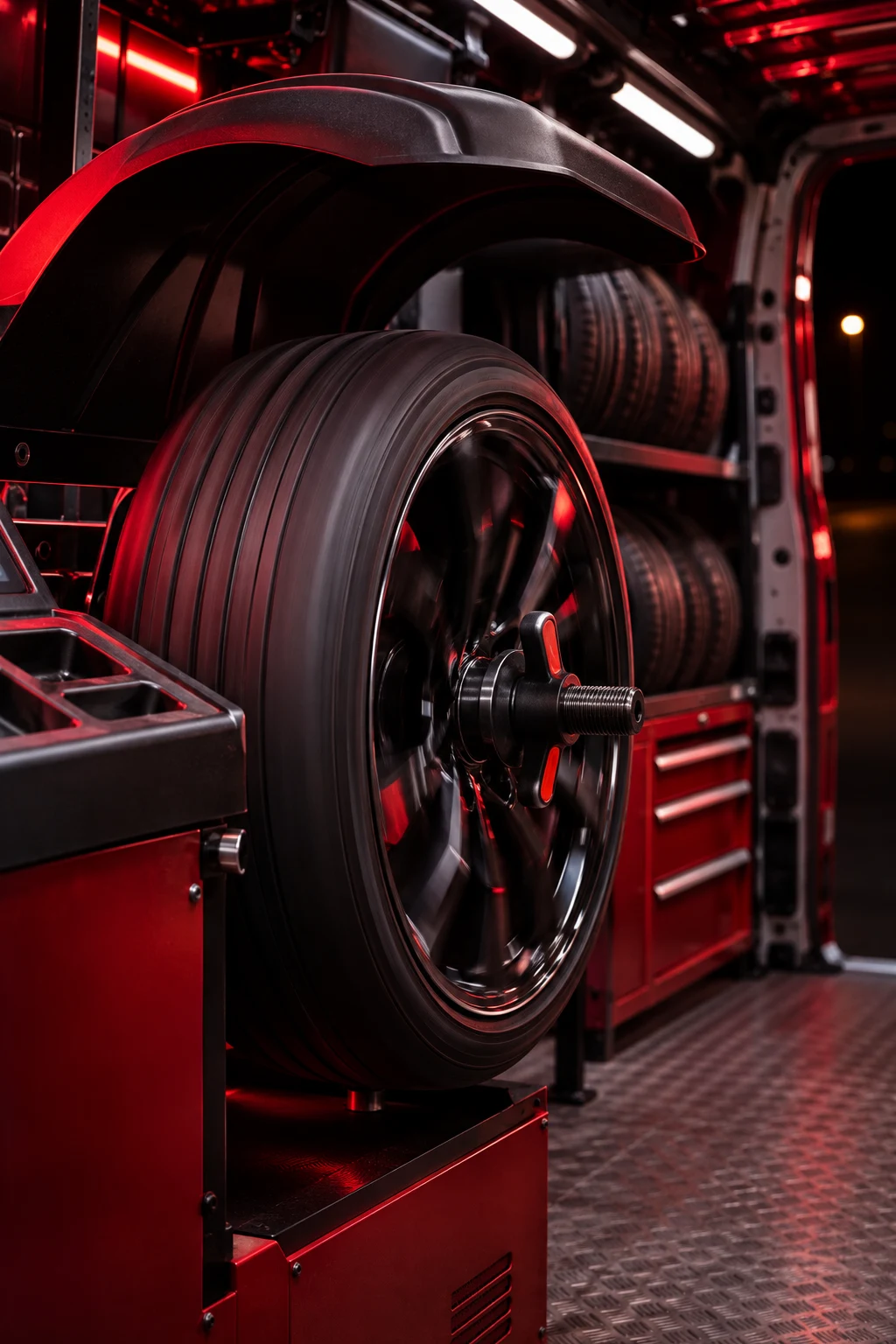
Run-flats have very stiff sidewalls, so fitting them needs a tyre changer with an assist arm and a fitter who knows how to use it. Forcing them on with the wrong kit can damage the bead or the wheel. After fitting, the TPMS has to be checked and, on some cars, reset. Our vans are equipped for run-flats, so we can fit them on your driveway or at your workplace.
How much do run-flats cost?
Run-flats usually cost more than the equivalent standard tyre, and premium cars often use large wheel sizes. For a guide to what makes up a fitted price, see our mobile tyre fitting cost guide. If you are choosing between brands, our budget vs premium tyres article explains what changes from tier to tier.
Run-flat puncture in Yorkshire?
If your TPMS warning has come on, slow down, stay under 50mph and head somewhere safe. Then call 07000 000 000 or send your location on WhatsApp. We carry popular run-flat sizes and can usually fit a replacement the same day – at home, at work or at a motorway service area. If you are on a motorway, read flat tyre on the motorway first.