

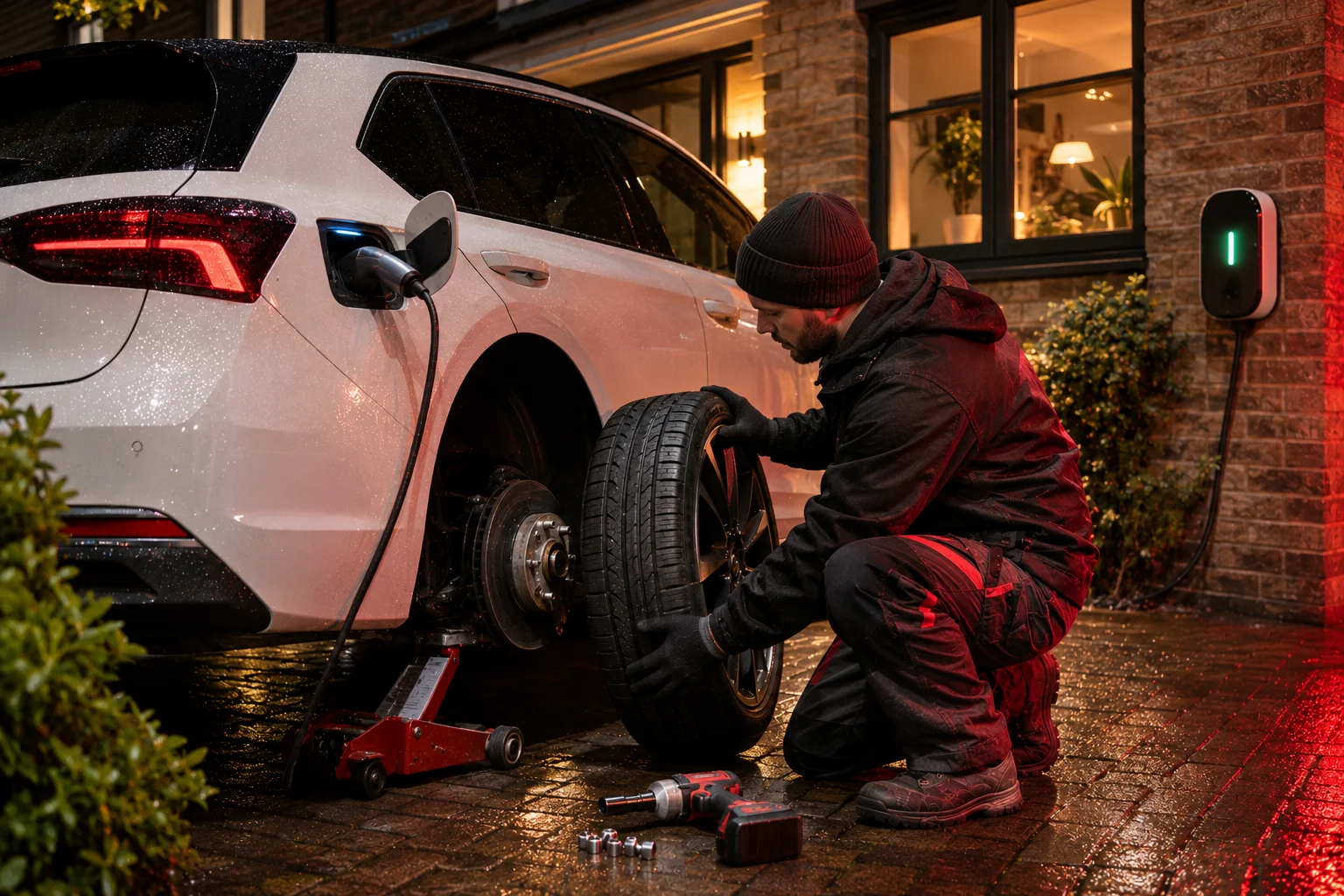
Electric cars are quieter, quicker off the line and cheaper to run – but they are also hard on rubber. If you drive a Tesla, a Kia EV6, an MG4 or any other electric car around Leeds, Sheffield or York, you have probably noticed the tyres needing attention sooner than on your old petrol car. This guide to EV tyres explains why, what makes an EV-ready tyre different, and how to make a set last longer.
Do electric cars need special tyres?
Not by law. You can fit any road-legal tyre that matches the size, load index and speed rating your car maker specifies. But tyres designed for electric cars – often marked EV, or carrying an HL load rating – are built to deal with the three things that make EVs different:
- Weight. A battery pack can add several hundred kilograms compared with a similar petrol car.
- Instant torque. Full pulling power from a standstill scrubs the tread, especially on driven wheels.
- Silence. With no engine noise, tyre roar becomes the loudest sound in the cabin.
Why EV tyres wear faster
Weight and torque are the main reasons. Research by Emissions Analytics, reported by Autocar, suggests that every extra 450kg of kerb weight increases tyre wear by around 20%. Add strong acceleration from every junction and roundabout, and tread disappears faster than many owners expect. Regenerative braking helps the brake pads, but it still puts load through the tyres.
What makes an EV tyre different?
- Higher load capacity. Many EV tyres are XL (extra load) or HL (high load). HL is a newer marking for heavy vehicles, typically a few load index points above XL in the same size.
- Stronger sidewalls and casing to carry the weight without excessive flex.
- Low rolling resistance compounds to protect your range.
- Noise-reducing technology – some have a foam layer inside to absorb road roar.
- Tread compounds tuned for torque, so they resist scrubbing when you pull away briskly.
Do the right tyres improve range?
Yes. Rolling resistance is one of the biggest forces your motor has to overcome. A tyre with a better fuel efficiency rating on its label (A or B) can add real miles to each charge compared with a poor one. Correct tyre pressure matters just as much – an under-inflated tyre drags, wears its shoulders and costs range.
How to read the sidewall on an EV
Take 235/45 R19 99W XL as an example:
- 235 – width in millimetres.
- 45 – sidewall height as a percentage of the width.
- R19 – radial tyre for a 19-inch wheel.
- 99 – load index (the maximum load per tyre).
- W – speed rating.
- XL / HL – reinforced for extra or high load.
Never fit a tyre with a lower load index than your car needs. On a heavy EV, that is a safety issue, not just a wear issue.
How to make EV tyres last longer
- Check pressures every couple of weeks. Use the figures on the door sticker – EVs often run higher pressures than you might expect.
- Drive smoothly. Gentle acceleration from junctions makes a big difference to tread life.
- Rotate tyres front to rear where your car maker allows, so they wear evenly.
- Check alignment if the inner or outer edges wear first – heavy cars are sensitive to it.
- Replace at around 3mm rather than 1.6mm, especially for wet grip. See legal tyre tread depth in the UK.
Are EV tyres more expensive?
Usually, yes – they are often larger, with higher load ratings and extra technology. Auto Trader suggests around £150–£250 per tyre for a typical electric car in the UK, with high-performance sizes costing more. Choosing the right tier for your mileage still matters; our budget vs premium tyres guide explains the trade-offs, and our price guide shows what a fitted price includes.
Punctures on electric cars
Most EVs come with a sealant kit rather than a spare, and some use run-flat tyres. A screw in the central tread can often be repaired properly – see can my puncture be repaired? If your car has run-flats, read run-flat tyres explained.
EV tyre fitting at home in Yorkshire
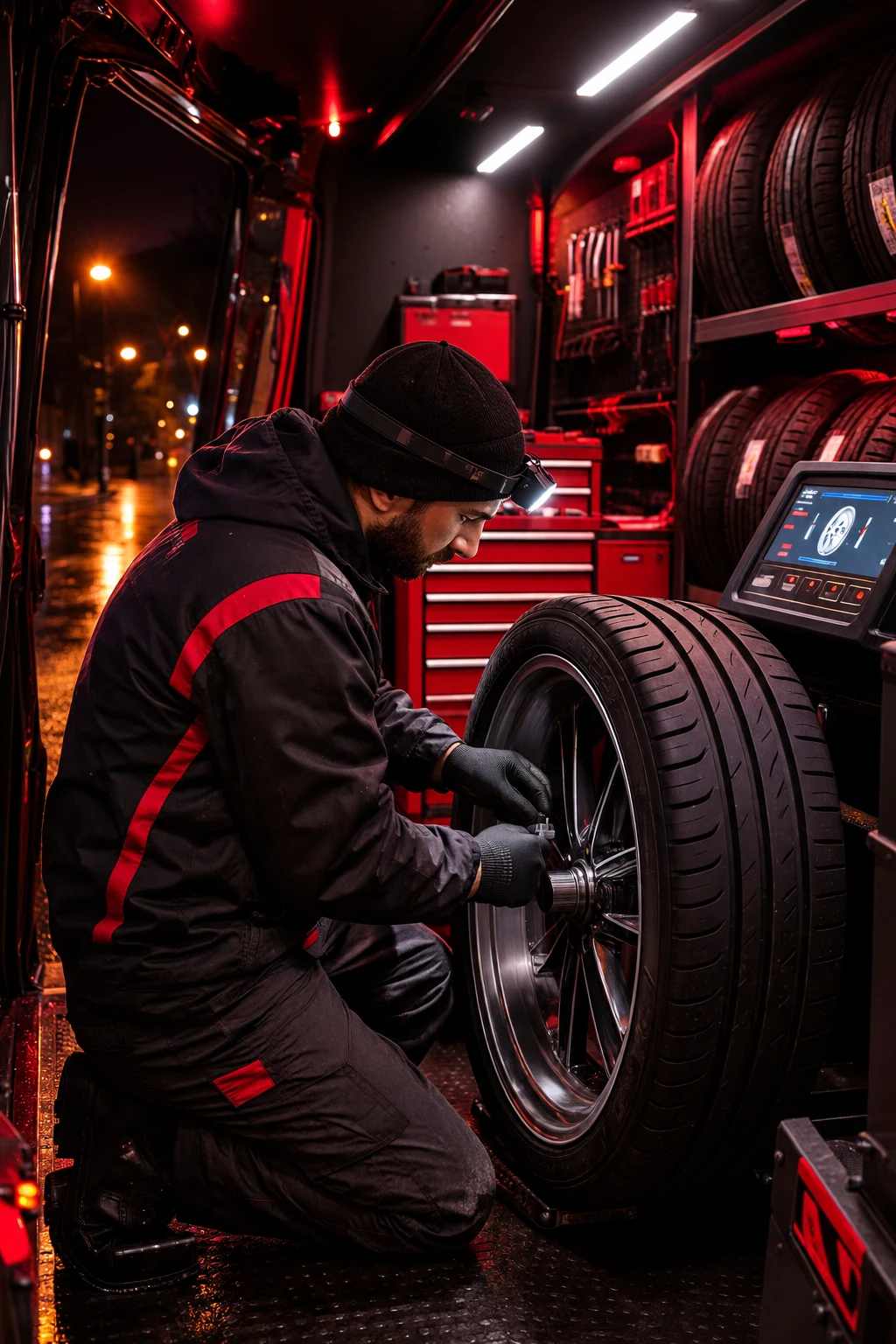
Our vans are equipped to fit and balance large EV wheels on your driveway or at your workplace – no need to use up range driving to a tyre centre. Send your tyre size and postcode on WhatsApp or call 07000 000 000 for a fixed, fitted price. See the tyres we fit.